Exasync reads orders from portals, email and Excel, books them into your TMS and reports arrivals before anyone calls. Through the interface where there is one. Through the screen where there is not.
Free. No changes to your software. No sales pitch.


Hundreds a day. Each one is touched, many of them several times: read, check, type into the TMS, confirm.

Customer portals, legacy systems and telematics do not hand over their data. An employee transfers it by hand, every day.

Dispatch searches telematics and TMS and calls back. For every shipment, for every customer.




Tolls, driving data and invoices are checked against each other. Deviations arrive as a list, not later on the invoice.
And the electronic consignment note: the same data produces the eCMR, with pickup and delivery via geofence and signature. Go to eCMR automation
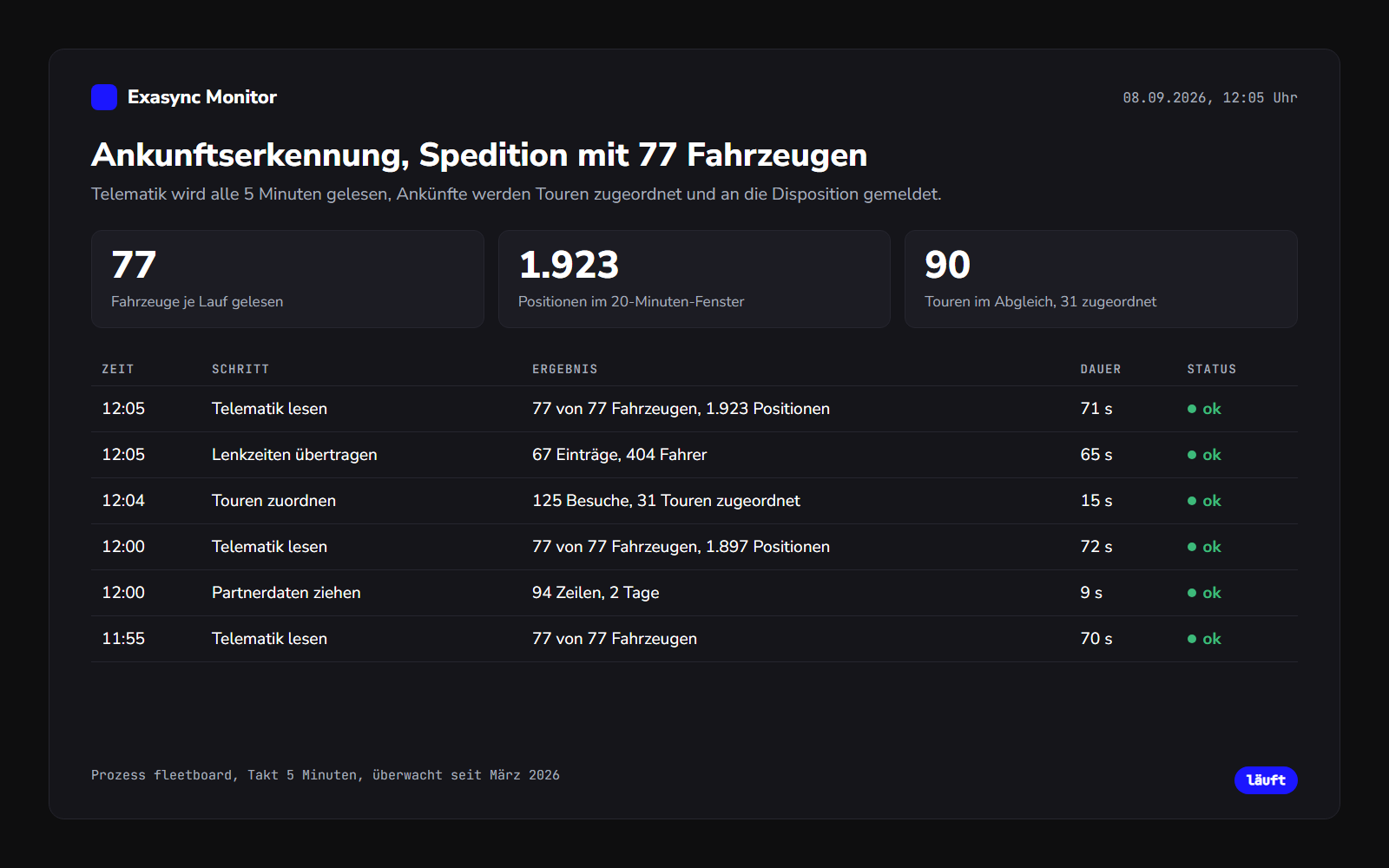
Dispatch did not know when a truck would reach the ramp. Today a service reads the telematics every 15 minutes. It reports the arrival before anyone calls.
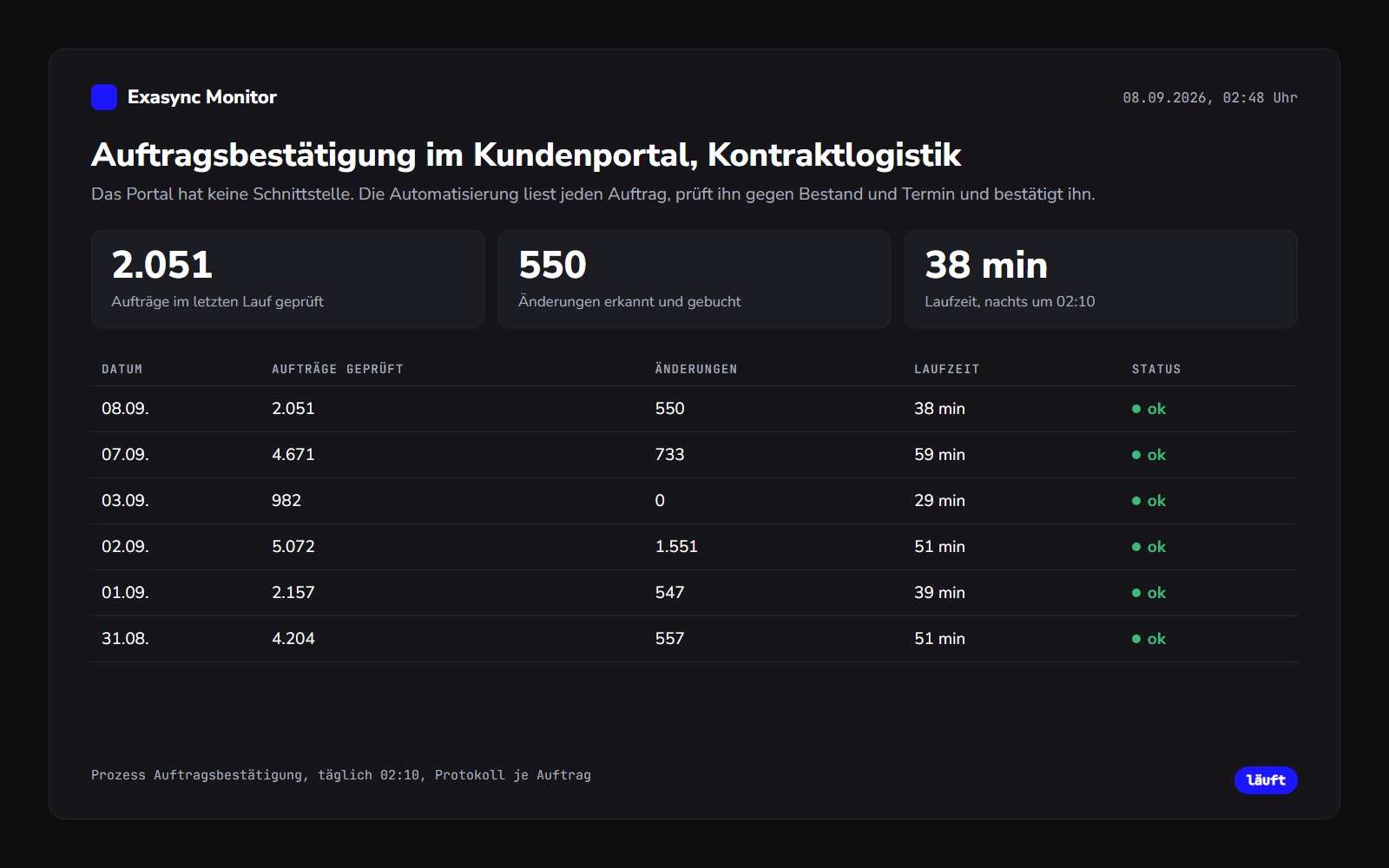
The customer places orders in a portal with no interface. A staff member retyped them. Today the automation reads the portal, checks every order and confirms it.
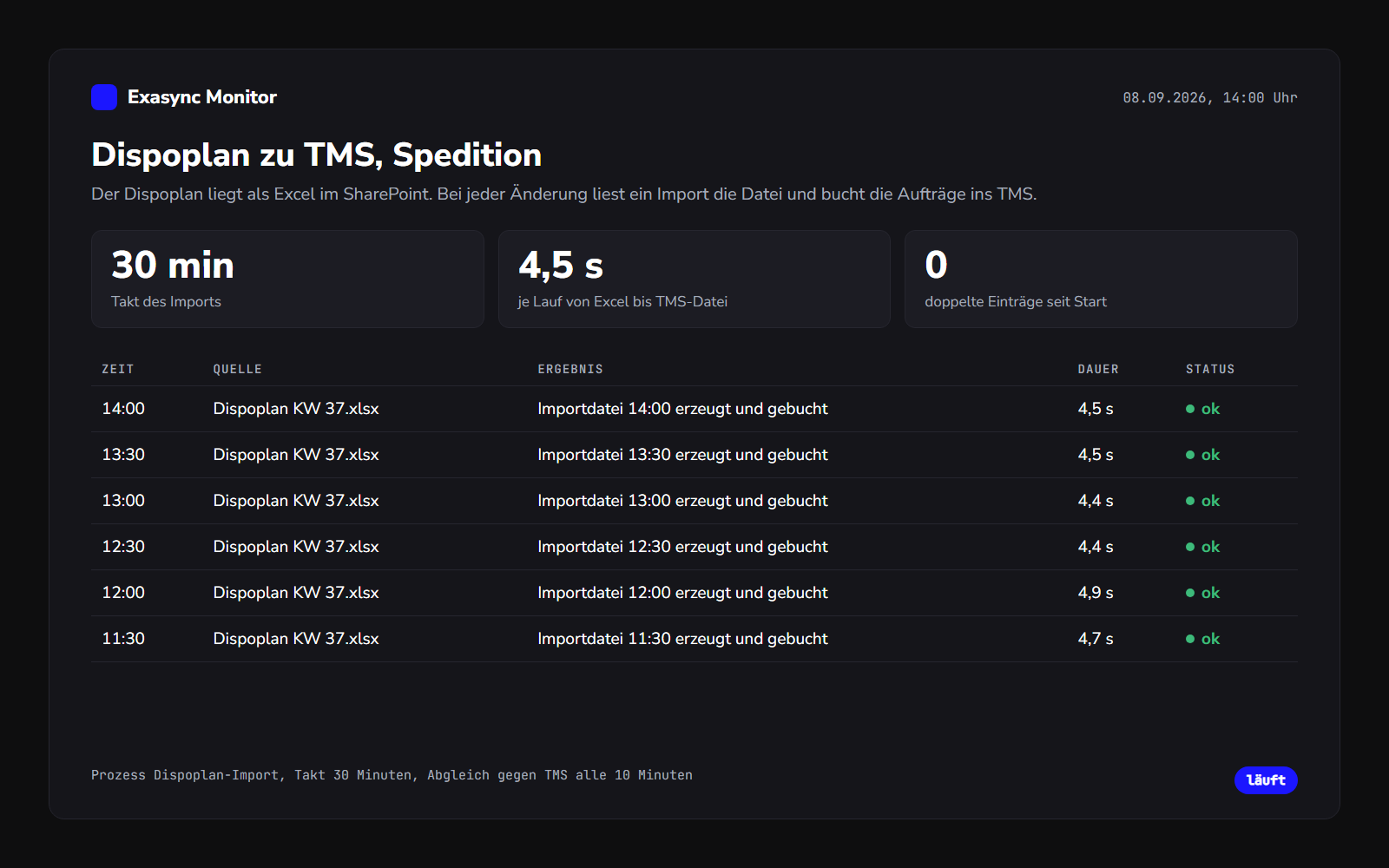
The dispatch plan lived as Excel in SharePoint, and the TMS still needed the data. Today an import reads the file and books the orders into the TMS.

We have dispatched ourselves. We know which idea survives a Monday morning.

We start with the process that costs the most manual work. Only when it runs in production does the next one follow.

Every automation reports before you notice an outage. A log for every step, a check after every deploy.

Your data stays in your systems. Intermediate storage sits in data centres in Finland and the EU.

You describe where things get retyped, chased or copied today. We tell you what we can automate and what we cannot.

